Home · Panama disease
A disease trail
Race 1, then Tropical Race 4
Panama disease is the popular name for Fusarium wilt of banana. The trail has more than one race, and they should not be told as a single event.
Gros Michel, FAO writes, used to dominate global exports until the 1950s, when widespread epidemics of Fusarium Race 1 (Foc R1) eliminated it from large-scale commercial production and the Cavendish subgroup became the new industry standard. [FAO] The Bluefields group, which includes ‘Bluefields’ and ‘Dwarf Bluefields’, was the leading commercial variety in Hawai‘i, and now accounts for less than 1% of banana production there because of its susceptibility to Panama wilt disease. [CTAHR]
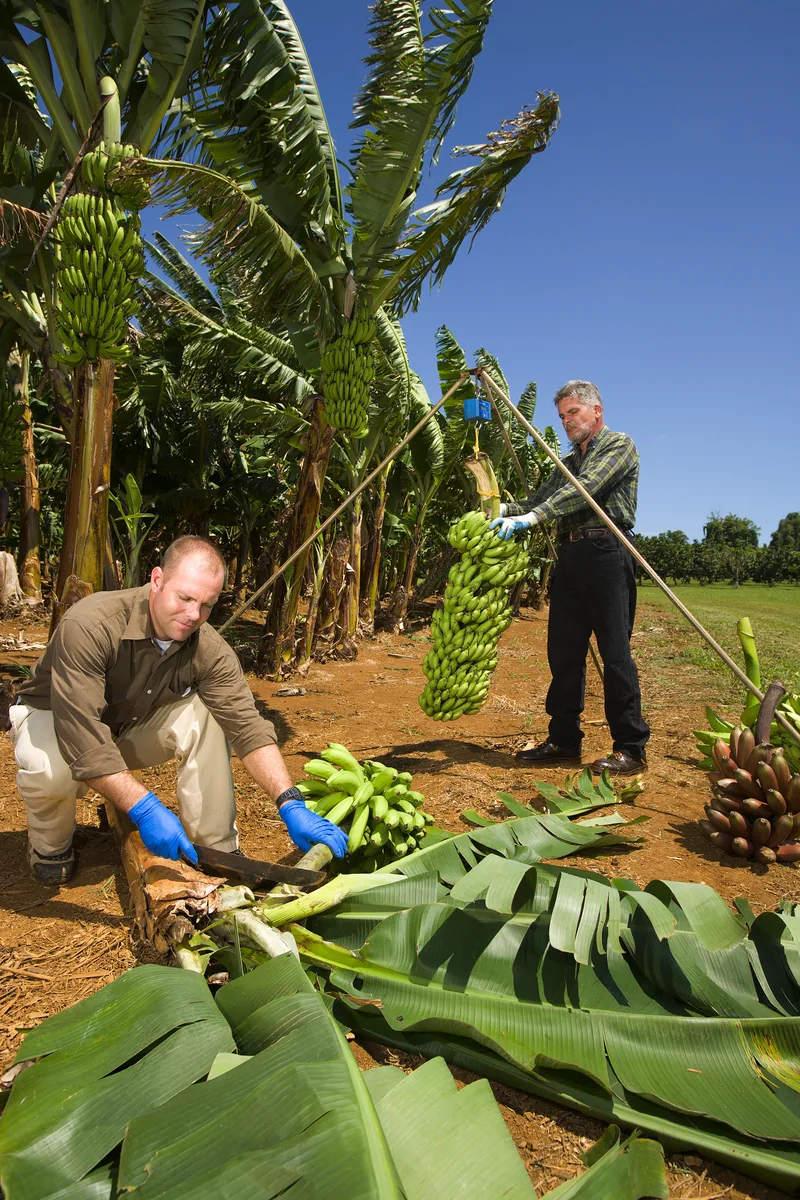
FAO identifies the latest race causing banana Fusarium wilt in Cavendish cultivars, and many others, as Fusarium oxysporum f. sp. cubense tropical race 4 (Foc TR4), also known as Tropical race 4 (TR4). [FAO] FAO’s TR4 guidelines say the disease is caused by a fungus that lives in the soil, causes wilting and death of plants, and penetrates and blocks the vascular system, cutting off the supply of water and nutrients. [FAO] The same guidelines say TR4 infects most banana and plantain varieties including the Cavendish, which provides around 50 percent of global banana production. [FAO]
TR4 was first detected in Asia over 40 years ago, arrived in Africa in 2013, and reached Latin America in 2019, according to FAO. [FAO] The spores of the fungus, FAO notes, could survive in the soil for decades. [FAO]
What this page will not flatten
Race 1 unseated Gros Michel and made Cavendish the export standard. Tropical Race 4 is a later strain that infects Cavendish. FAO’s dates for TR4 are Asia, then Africa in 2013, then Latin America in 2019. The spores can survive in soil for decades. Those are related facts, and they are not the same outbreak.